
Mahjong Solitaire Classic Game
Brainteaser Puzzle Game StudioBoard
4.91.68K Reviews
- Version
- 1.6.6
- Installs
- 1.00M
- Age Rating
- Everyone
Screenshots
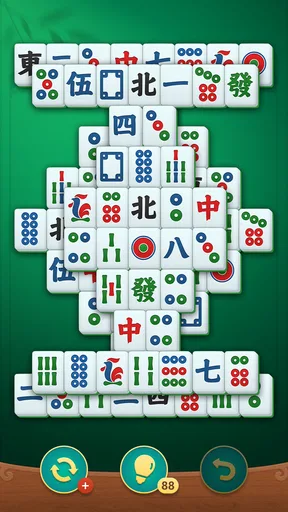
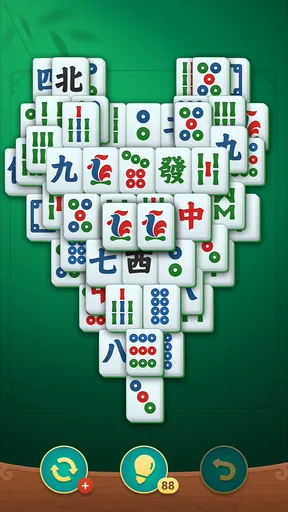
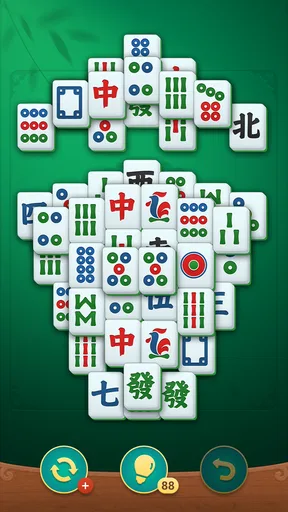
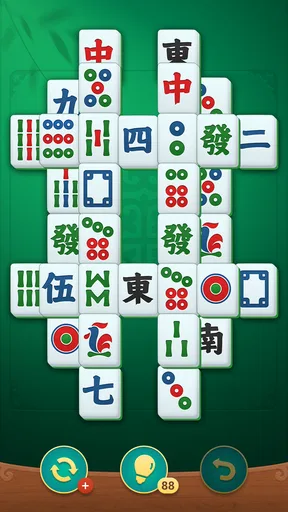
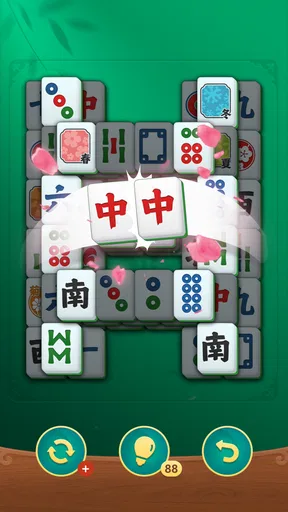
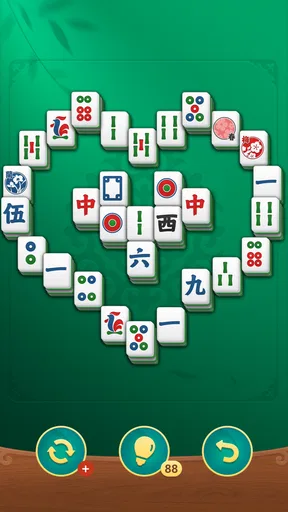
Our Review of Mahjong Solitaire Classic Game
 Analysis by Appyee
I installed Mahjong Solitaire Classic Game expecting a familiar tile-matching pastime, and that is exactly where its appeal begins. It is a board game from Brainteaser Puzzle Game Studio, built around the simple act of finding two matching, available tiles and clearing them from the layout. The rules are easy to understand, but the board still asks me to look carefully, plan a few moves ahead, and accept that a quick-looking pair may not always be the smartest choice.
What makes the experience work is the short cycle between action and response. I tap a tile, choose its match, watch the board open up, and immediately start scanning for the next useful pair. That rhythm makes it comfortable for a few spare minutes, yet it also gives me a reason to continue when a layout becomes more complicated. The game is free to play and suitable for Everyone, so it is an approachable choice for casual players who want a quiet puzzle rather than a demanding competitive game.
How the first move sets the whole session in motion
The first action is deliberately uncomplicated: I inspect the arrangement and remove a legal matching pair. There is no long tutorial to learn before the game makes sense. The board itself explains the task. Tiles that are blocked or covered cannot be used freely, so the real decision is not simply “which two look alike?” It is “which pair will reveal the most useful space?” That small distinction gives the familiar format more depth than a basic memory exercise.
I found it helpful to begin with the upper layers and the edges of the layout rather than tapping the first obvious match. Clearing a pair that exposes several tiles can create a chain of opportunities, while removing a pair from a less important area may leave the central structure unchanged. This is one of the game’s most useful habits: treat every match as a board-opening decision, not just a point-scoring tap.
The controls suit touchscreens well. A tap-based board feels natural on a phone, and the compact format makes it possible to play while waiting for an appointment, taking a short break, or winding down before bed. I do not need a controller, a long explanation, or a large uninterrupted block of time to start. That low entry barrier is a major reason the game can appeal to people who normally avoid more involved puzzle titles.
There is also a gentle mental adjustment when I return after a break. I may remember the general strategy, but not the exact visual route through a new arrangement. That keeps the opening from feeling completely automatic. The first few choices are usually about orientation: identifying exposed tiles, spotting pairs that are currently usable, and deciding whether to prioritize immediate space or preserve a promising match for later.
Why the matching rule is more strategic than it looks
Mahjong solitaire often appears relaxing because the action is slow and familiar, but the board can punish careless order. If I remove a pair simply because it is visible, I may uncover a tile whose matching partner remains buried. If I wait too long, I can also leave the board crowded and reduce my useful options. The best play sits between those extremes: clear pairs that improve access while keeping an eye on future matches.
When I play casually, I use a three-step scan. First I check the most exposed tiles. Then I look for pairs that would uncover a row or upper section. Finally I consider whether a pair is worth taking now or whether it is safer to preserve one of its tiles until another blockage is removed. This approach is more reliable than tapping randomly, and it turns a very simple rule set into a small exercise in visual planning.
That makes the game a good fit for someone who wants light concentration without the pressure of a timer or an opponent. It is also useful for players who enjoy sorting patterns and making small decisions repeatedly. However, anyone seeking a story, character progression, fast action, or a deep competitive ranking system should look elsewhere. This is a contained board puzzle, and its strength is focus rather than variety in genre.
The feedback rhythm keeps each choice readable
After every successful match, the most important feedback is visual: two tiles disappear and the remaining arrangement becomes easier to read. That immediate change gives my decision a clear consequence. I can see whether the move opened a useful section or merely reduced the board by one pair. Because the result arrives right away, I rarely feel disconnected from the puzzle.
The rhythm is satisfying because it alternates between observation and action. I scan, tap, confirm the pair, watch the space change, and scan again. A strong move creates a small burst of possibility, while a weak move leaves me with fewer obvious routes. This is the kind of feedback that encourages another attempt without needing elaborate rewards. The board itself supplies the explanation.
One practical tip is to pause for a moment after a pair vanishes. It is tempting to tap quickly when several matches seem visible, but the new gaps can change which tiles are accessible. A brief reset of my attention helps me notice a newly exposed match that would have been missed in a rapid sequence. In this game, speed is rarely as valuable as keeping the board mentally organized.
I also recommend playing with a consistent viewing distance. On a phone, tiles can look similar when I hold the screen too close or play in poor light. Moving the device slightly farther away often makes the overall structure easier to understand than staring at one small cluster. That is a modest but useful adjustment, especially on dense layouts where local matching can hide the larger shape of the board.
When the board becomes a visual attention test
The most interesting feedback is not the disappearance itself, but the way the open spaces change my priorities. A pair that looked unimportant can become central after surrounding tiles are cleared. Conversely, a match that seems urgent may be better left alone if it does not improve access. I found that the game rewards a calm scan more than frantic tapping, which is why it works well as a short decompression activity.
There is a trade-off, though. Players who prefer explicit guidance may find the board too self-directed. The pleasure comes from discovering the next route rather than following a highlighted objective. If I want a puzzle that tells me exactly what to do, this format can feel less comfortable. If I enjoy working out the order myself, that same lack of hand-holding becomes part of the appeal.
The feedback loop also explains why the game has broad casual appeal. A successful move is understandable even to a first-time player, while a difficult position still leaves room for improvement. I can finish a session feeling that I made meaningful choices, not merely that I waited for an animation. That distinction matters in a board game designed for repeated, low-pressure play.
The reward is a clearer board, not just completion
The obvious reward is reaching a cleared board, but the smaller rewards arrive throughout the session. Each opened section reduces visual clutter. Each newly available pair confirms that an earlier choice had value. When several matches follow one another smoothly, the board seems to answer my planning with a clean sequence of progress. That is enough to make a short session feel complete even before the final tile disappears.
I particularly like the reward of recovering from a messy position. Sometimes I make an ordinary move and the layout becomes awkward, with few clear options. Instead of feeling finished immediately, I can search for a pair that opens a buried area and rebuild the flow. That recovery process gives the game more staying power than a simple “find any match” activity. The satisfaction comes from restoring order.
For everyday use, this makes the game a practical break between tasks. If I have a few minutes before a meeting or while waiting for food, I can play without committing to a long narrative chapter. The board gives me a clear beginning and a natural stopping point. On a quieter evening, I can continue into another layout because the previous solve leaves me with the feeling that one more careful attempt might be even cleaner.
The game’s audience size supports that casual positioning. It has passed one million installs and holds a 4.9 average from roughly 156 thousand ratings, which suggests that the straightforward format is connecting with many players. I do not treat popularity as proof that every player will enjoy it, but those figures fit my experience: the game is easy to start, easy to understand, and pleasant when I want a board puzzle without extra complications.
What the free model means in practice
The game is free to download and play, with in-app purchases priced at $7.99 per item. That makes the initial decision simple: I can try the core board experience without paying first. For a casual player, this is useful because the matching loop becomes clear very quickly. I can decide whether the visual style, pace, and level of challenge suit me before considering any purchase.
The trade-off is that free games may feel less streamlined than a paid, one-time board title, depending on how a player reacts to the surrounding monetization. I would approach the purchase option as something to evaluate only after spending enough time with the basic play. Someone who strongly prefers a completely paid-up-front experience may be happier with a premium alternative that removes the free-to-play context altogether.
There is also a difference between the reward this game offers and the reward found in more elaborate puzzle apps. It does not need a story twist or a collection system to make a successful match feel good. Its reward is clarity, progress, and the small satisfaction of making the board more manageable. That simplicity is a strength for focused players, but it may feel thin to anyone who needs constant novelty.
Why a session resets so naturally
A completed board creates a clean reset. There is no need to remember a long plot, rebuild a character, or recover from a complicated failure state. I finish, take in the solved arrangement, and can either stop or begin again with a fresh puzzle mindset. That makes the game unusually easy to fit around real life. A session can be a short pause rather than an appointment.
The reset also protects the game from becoming too intimidating. If I make a poor sequence of choices, I am not carrying a large cost into the next attempt. I can treat the experience as practice: observe how the board responds, notice which openings mattered, and try a different order next time. This is especially helpful for new players who are still learning to think in terms of access and exposure rather than simple matching.
My preferred routine is to stop when I notice that I am scanning without really seeing. The game is relaxing, but tired eyes can make similar tiles harder to distinguish and lead to impulsive choices. Taking a break preserves the calm quality of the experience. When I return, the reset feels inviting instead of demanding, because the game asks for attention only in the present layout.
For players who want a more measurable long-term challenge, the reset may feel too light. Traditional board alternatives can offer physical pieces, social interaction, or a stronger sense of ownership. Other mobile puzzle games may provide daily objectives, narrative chapters, or more dramatic progression. I would choose this title over those options when I value quick access and a quiet solo routine, not when I need a large content ecosystem.
Who should install it and who should skip it
I would recommend it to people who enjoy classic tile puzzles, visual sorting, and short sessions that can end cleanly. It is also a good choice for a family member who wants an Everyone-rated board game with rules that can be understood almost immediately. The minimum requirement is Android 7.0, so it is accessible to users with older supported Android devices rather than being limited to recent hardware.
I would be more cautious about recommending it to players who become frustrated by planning mistakes or who want every move explained. The game expects me to inspect the arrangement and make my own choices. It is not the right fit for someone looking for action, multiplayer competition, a story campaign, or an unusually complex strategy system. A physical mahjong set is better for social play, while a richer puzzle adventure is better for narrative motivation.
The developer, Brainteaser Puzzle Game Studio, has kept the central idea focused. The current version is 1.6.6, and the overall presentation aims at accessibility rather than turning the board into a technical showcase. That focus is welcome, although players who expect constant feature expansion may find the core format deliberately narrow. Its identity comes from repeating the board loop well, not from changing genres between sessions.
My verdict on the complete loop
Mahjong Solitaire Classic Game succeeds because its loop is easy to describe but rewarding to repeat: I find a usable pair, remove it, read the new spaces, and decide whether the board deserves another careful move. The feedback is immediate, the reward is visible progress, and the reset is gentle enough that a finished or imperfect session never feels like a major commitment.
My most useful advice is to play for board access rather than immediate matching. Look for pairs that uncover upper layers, pause after each removal, and let the new arrangement settle before choosing again. Those habits make the difference between random tapping and satisfying puzzle play. They also reveal why the game can remain engaging after the basic rule has become familiar.
There are limits: the experience is intentionally solitary, its variety comes from the board rather than a broad progression system, and the free structure includes optional purchases of $7.99 per item. Still, for a calm mobile board game that starts quickly and rewards attentive decisions, I think it is a strong recommendation. I would install it for short breaks, quiet evenings, or any moment when I want a simple reset that gives my mind something precise to do.
Verdict
Strengths of Mahjong Solitaire Classic Game
- Simple controls make it easy to start playing immediately.
- Multiple tile layouts provide variety beyond the classic board.
- Hint and shuffle options help when a puzzle becomes difficult.
- Short rounds are convenient for quick breaks or casual play.
- Offline access lets you play without a Wi-Fi or mobile connection.
Limitations of Mahjong Solitaire Classic Game
- Some layouts may feel repetitive after extended play sessions.
- Shuffle and hint features can reduce the challenge for purists.
- Small tiles may be harder to distinguish on compact phone screens.
- Difficulty can depend heavily on the initial tile arrangement.
- Advertising may interrupt the experience in the free version.
Similar Picks in This Category
View All
Ludo King®
Gametion4.1

Ludo
Yarsa Games4.6

Tile Master® - Matching Game
Higgs Studio3.6

Checkers Online
CC Games4.6

Dominoes
Loop Games4.7

Chess
Chess Prince4.6
Frequently Asked Questions
What is Mahjong Solitaire Classic Game?
Mahjong Solitaire Classic Game is a single-player puzzle app based on the traditional tile-matching format. Instead of playing the four-player tabletop version, you clear the board by finding and removing identical, uncovered tiles in pairs. The game usually includes classic layouts, relaxing background music, simple touch controls, and progressively challenging arrangements suitable for both casual players and puzzle fans.
How do you play Mahjong Solitaire Classic Game?
To play, tap two matching tiles that are free to move. A tile is generally considered available when no tile is covering it and at least one of its left or right sides is open. Remove all matching pairs to clear the layout and complete the level. Some versions provide hints, reshuffling, undo options, or tile highlighting to help when no obvious move is available.
Does Mahjong Solitaire Classic Game require an internet connection?
Most Mahjong Solitaire Classic Game apps can be played offline after installation, which makes them convenient for travel, commuting, or relaxing without mobile data. However, an internet connection may still be needed for advertisements, cloud synchronization, leaderboard features, updates, or optional purchases. Availability of offline play can vary by version, so it is worth checking the app description and permissions before downloading.
Is Mahjong Solitaire Classic Game free to download and play?
The game is commonly available as a free download, allowing users to access the basic tile-matching experience without an upfront payment. Free editions may include advertising, optional hints, extra layouts, or in-app purchases. Some versions offer a paid upgrade to remove ads or unlock additional content. Always review the store listing for current pricing and purchase details before installing.
Is Mahjong Solitaire Classic Game suitable for beginners and children?
Mahjong Solitaire Classic Game is generally easy for beginners because its controls are based on simple taps and the objective is explained quickly. It does not require knowledge of traditional Mahjong rules. Children can also enjoy the pattern-recognition gameplay, although parents should check the specific app’s advertising, in-app purchases, privacy policy, and age rating before allowing younger players to use it.
Play our best games!


